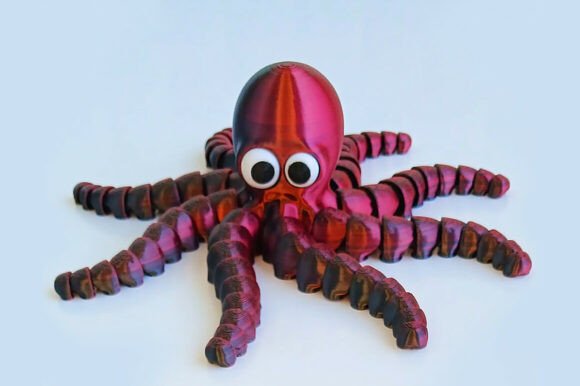
Bringing the Ocean to Your Desk: The Art and Utility of the Articulated Octopus – Flexible 3D Model
The landscape of additive manufacturing has evolved significantly beyond functional prototypes and industrial parts. Today, it is a medium for artistic expression, educational tools, and tactile entertainment. Among the most popular categories in this shift are print-in-place models—complex geometries that emerge from the printer fully assembled and functional without post-processing. Leading this charge is the Articulated Octopus – Flexible 3D Model, a design that has captivated makers worldwide by combining biological realism with engineering precision. This article explores the mechanics, printing process, and real-world applications of this unique object, offering a comprehensive guide for hobbyists, educators, and designers.
Understanding Print-in-Place Engineering
To appreciate the value of an articulated octopus, one must first understand the engineering marvel behind "print-in-place" (PIP) technology. Traditional 3D printing often requires significant post-processing time. Once a multi-part model is finished, the user must remove support structures, clean up layer lines, and carefully assemble individual components using pins, screws, or adhesives. For complex figures like animals or robots, this assembly can be tedious and prone to failure if tolerances are not perfect.
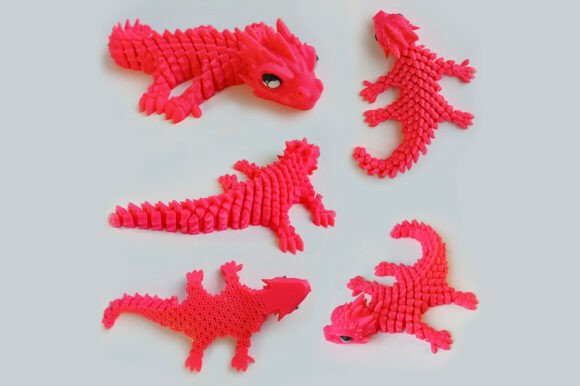
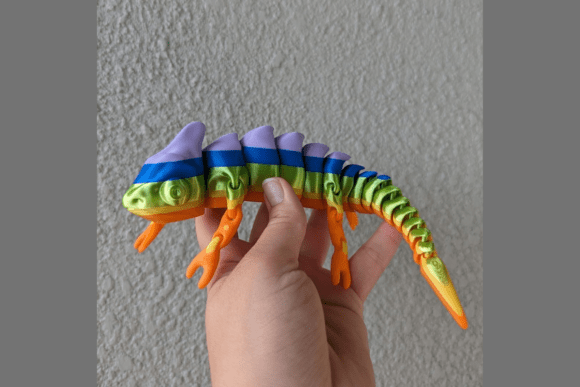
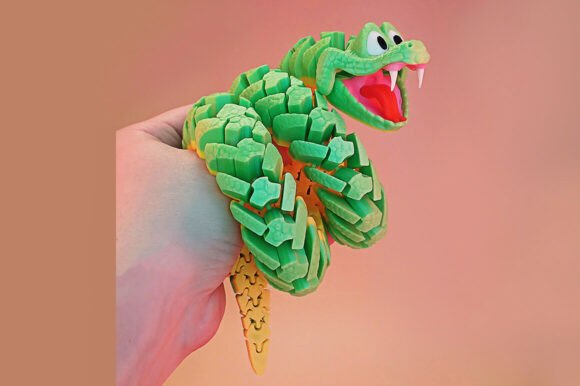
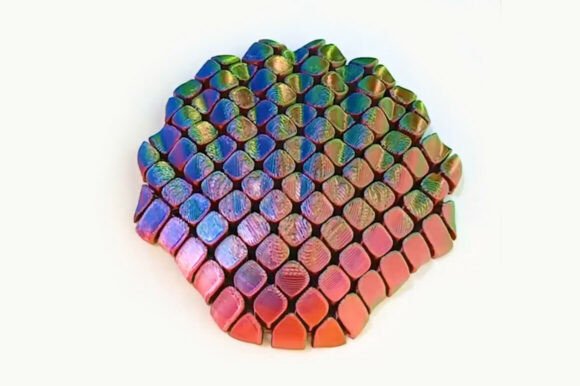
The Articulated Octopus – Flexible 3D Model eliminates these hurdles entirely. The design utilizes interlocking joints printed directly onto the build plate. These joints rely on precise gap tolerances—often measured in fractions of a millimeter—to create hinges that are tight enough to hold their shape but loose enough to allow smooth rotation. When the print completes, the tentacles are already connected to the head, and the internal mechanisms are free-moving. This approach not only saves hours of labor but also reduces material waste associated with support structures, making it a more sustainable choice for home printers.
The Role of FDM Technology
While stereolithography (SLA) resin printers can produce highly detailed articulated models, the specific popularity of the octopus design stems from its optimization for Fused Deposition Modeling (FDM). FDM, which uses thermoplastic filaments like PLA, PETG, or TPU, is accessible to a broader audience due to lower equipment costs and easier maintenance. The octopus design takes advantage of the layer-by-layer deposition method to create flexible segments. By orienting the print correctly, the filament layers align in a way that enhances the flexibility of the tentacles, allowing them to bend naturally rather than snapping under stress.
Key Features and Design Characteristics
The success of this model lies in its balance between aesthetic appeal and mechanical reliability. Several distinct characteristics define why this particular Articulated Octopus – Flexible 3D Model stands out in a crowded marketplace of digital assets.
- Zero Assembly Required: The most immediate benefit is convenience. Users simply hit "start" and walk away. There are no tiny pins to lose and no glue to cure. The model arrives ready to play immediately after cooling down.
- Natural Movement Dynamics: Unlike rigid plastic toys, the tentacles exhibit a fluid range of motion. Each segment acts as a hinge, allowing the octopus to curl, stretch, and twist. This mimics the hydrostatic skeleton found in real cephalopods, providing a satisfying tactile experience.
- No Support Structures Needed: The geometry is optimized so that overhangs are either minimal or self-supporting during the print. This results in a smoother surface finish and eliminates the need for sanding or cutting away excess material, preserving the integrity of the delicate joint gaps.
- Simplicity of Materials: This model does not require advanced multi-material setups. It prints perfectly with a single spool of filament. Whether using standard PLA for a stiff, colorful display piece or TPU for a softer, squishier feel, the design adapts to the material properties seamlessly.
Practical Applications Beyond Decoration
While the primary appeal of the Articulated Octopus – Flexible 3D Model is its visual charm, its utility extends into several practical domains. It serves as more than just a desk ornament; it is a tool for engagement, education, and stress relief.
Tactile Stress Relief and Fidgeting
In an era where mental health and focus are paramount, fidget tools have become essential office accessories. The octopus offers a unique alternative to traditional spinners or cubes. Manipulating the tentacles provides a repetitive, rhythmic motion that can help reduce anxiety and improve concentration. The soft, yielding nature of the flexible joints offers sensory feedback that is both calming and engaging. For professionals working long hours at a computer, having a tangible object to interact with can break the monotony of screen time and provide a brief mental reset.
Educational Demonstrations in Biology and Physics
Educators and science communicators find immense value in physical models. The octopus serves as an excellent teaching aid for marine biology classes, illustrating the anatomy of cephalopods. Teachers can demonstrate how suction cups are distributed along the arms and how the body structure supports movement in water. Furthermore, it introduces students to basic physics concepts such as leverage, friction, and material elasticity. By observing how the printed plastic bends and returns to shape, students gain an intuitive understanding of material science principles that are often abstract when taught purely through textbooks.
Customization and Creative Expression
For creators and artists, the octopus is a canvas. Because it prints cleanly without supports, it accepts paint, dye, and texture treatments exceptionally well. Hobbyists often experiment with different color combinations to mimic various species of octopus, from the vibrant blue-ringed octopus to the camouflaged mimic octopus. Some users even modify the digital file before printing, adjusting the length of the tentacles or adding custom details, showcasing the versatility of open-source 3D modeling workflows.
Optimizing the Printing Workflow
Although the Articulated Octopus – Flexible 3D Model is designed for ease of use, achieving the best results requires attention to printer settings. Understanding these nuances ensures that the final product moves smoothly and maintains its structural integrity over time.
Slicing Settings and Calibration
The most critical factor in printing articulated models is calibration. If the extrusion width is too wide, the gaps between the moving parts may close up, causing the tentacles to fuse together. Conversely, if the gaps are too large, the joints may become wobbly and lack tension. Most slicer profiles for this model recommend a slightly larger horizontal expansion or a specific gap tolerance setting. Users should perform a test print of a single joint section to verify fit before committing to the full print.
Filament Selection Strategies
The choice of filament dramatically alters the character of the final piece. Standard PLA is the default choice for beginners due to its stiffness and ease of printing. However, PLA can become brittle over time, especially if exposed to heat or UV light. For a more durable and flexible result, PETG is an excellent alternative. It offers greater impact resistance and slight flexibility, making the tentacles less likely to snap if bent aggressively. For those seeking maximum softness, Thermoplastic Polyurethane (TPU) creates a rubber-like octopus that feels incredibly lifelike, though it requires slower print speeds and careful retraction settings to avoid stringing.
Post-Print Adjustments
Even with optimal settings, minor adjustments might be necessary. If a tentacle is stuck, a gentle warm-up using a hairdryer can soften the plastic slightly, allowing for easier manipulation. In rare cases where the fit is too tight, lightly sanding the contact points within the joint can resolve the issue. Conversely, if the joint is too loose, applying a small amount of CA glue (super glue) to the outside of the hinge can tighten the fit by swelling the plastic slightly. These simple tweaks ensure the Articulated Octopus – Flexible 3D Model functions flawlessly.
Considerations for Long-Term Use
As with any printed object, longevity depends on usage and environment. While the design is robust, the thin walls of the tentacles are the most vulnerable points. Avoid dropping the model on hard surfaces, as this can cause cracks in the joints. Additionally, prolonged exposure to direct sunlight can degrade PLA, leading to discoloration and brittleness. Storing the octopus indoors, away from heat sources, will preserve its flexibility and appearance for years.
Furthermore, while the model is fun for all ages, small printed parts can pose a choking hazard for very young children. Parents and educators should supervise younger users to ensure safe handling. For older children and adults, however, the octopus remains a durable and engaging toy that encourages exploration and creativity.
Conclusion
The Articulated Octopus – Flexible 3D Model represents a convergence of art, engineering, and accessibility. It demonstrates how modern 3D printing technology can democratize complex manufacturing, allowing anyone with a desktop printer to create sophisticated, functional objects. Its ability to entertain, educate, and serve as a therapeutic tool makes it a versatile addition to any collection. Whether you are a seasoned engineer analyzing joint tolerances or a novice maker looking for your first successful print-in-place project, this octopus offers a rewarding experience. It brings a touch of the ocean’s mystery and grace into our daily lives, proving that sometimes the most profound innovations are found in the simplest, most playful forms.