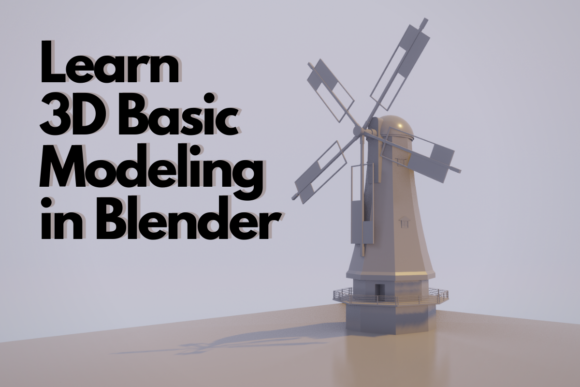
Learn 3D Basic Modeling in Blender
Stepping into the world of three-dimensional design can feel overwhelming, especially when confronted with complex software interfaces and jargon-heavy tutorials. However, the barrier to entry has never been lower. Learn 3D Basic Modeling in Blender offers a structured, accessible pathway for anyone looking to transition from concept to creation without needing a degree in computer graphics or years of prior experience. This course is not just about clicking buttons; it is about understanding the logic of digital sculpting and polygon manipulation.
Blender has revolutionized the creative industry by providing professional-grade tools completely free of charge. Yet, knowing that the tool exists is different from knowing how to wield it effectively. This class bridges that gap. Led by Jose Vega, an experienced practitioner, the curriculum focuses on practical application rather than abstract theory. Students are guided through the essential poly modeling tools, modifiers, and techniques required to build simple yet polished assets. By stripping away the unnecessary complexity, the learning curve becomes manageable, allowing participants to see tangible results quickly.
Why This Skill Matters Across Different Fields
The relevance of 3D modeling extends far beyond game development or animation studios. In today’s digital-first economy, the ability to visualize ideas in three dimensions is becoming a valuable asset across various professions. Understanding what Learn 3D Basic Modeling in Blender entails helps clarify why this skill set is increasingly sought after by diverse groups of people.
For marketers and bloggers, 3D assets offer a way to break through the noise of flat imagery. A custom product render or an interactive infographic can significantly increase engagement rates compared to standard stock photos. Small business owners benefit from the ability to prototype concepts before investing in physical manufacturing. Instead of paying for expensive mockups, they can create basic visualizations themselves to test market interest or communicate with manufacturers more effectively.
Educators and content creators find immense value in this skill as well. Visual aids that explain complex spatial relationships—such as architectural designs, mechanical parts, or biological structures—are often easier to grasp when viewed in 3D. The flexibility to rotate, zoom, and inspect these models provides a layer of clarity that static images cannot match. Furthermore, for freelancers, adding 3D modeling to their portfolio opens up new revenue streams, allowing them to take on projects ranging from social media content to small-scale game assets.
A Closer Look at the Curriculum
The core of this course lies in its focus on fundamentals. Jose Vega does not assume prior knowledge, making it ideal for absolute beginners. The instruction begins with navigating the Blender interface, a task that often intimidates newcomers due to its density of shortcuts and panels. By demystifying the workspace, students gain confidence early in the process.
The course then moves into poly modeling, the technique of building shapes using polygons. This is the backbone of most 3D character and object creation. Students learn how to manipulate vertices, edges, and faces to form coherent structures. Rather than relying heavily on pre-made templates, learners are taught to construct models from scratch, fostering a deeper understanding of geometry and topology.
- Basic Tools: Mastery of extrusion, scaling, rotating, and moving elements within the 3D space.
- Modifiers: Introduction to non-destructive workflows using modifiers like Subdivision Surface and Mirror, which allow for rapid iteration and refinement.
- Asset Creation: The culmination of the course involves creating a complete, simple asset model, applying all learned techniques to produce a cohesive final result.
This approach ensures that students do not just memorize steps but understand the "why" behind each action. For instance, learning how to use a modifier correctly allows for greater flexibility during the editing phase, saving time and reducing errors later in the pipeline.
Evaluating Fit for Your Goals
Deciding whether to invest time in Learn 3D Basic Modeling in Blender depends largely on your current skill level and future objectives. It is important to be realistic about what you hope to achieve. If your goal is to become a master animator capable of directing blockbuster films, this course is merely the first step. However, if you aim to create personal projects, enhance your marketing materials, or simply satisfy a creative curiosity, it is precisely the right starting point.
For the Beginner Hobbyist
Hobbyists often seek creative outlets that are both engaging and rewarding. This course provides immediate gratification. The ability to look at an empty screen and populate it with a 3D chair, a sword, or a fantasy creature is empowering. The low cost of entry (since Blender is free) combined with the structured guidance makes it a risk-free way to explore a new passion. The emphasis on simple assets ensures that frustration is minimized, keeping motivation high.
For the Professional Looking to Upskill
Professionals in adjacent fields, such as graphic designers or web developers, may find this course useful for expanding their toolkit. Understanding 3D principles can improve 2D design work, particularly in terms of lighting, perspective, and composition. While they may not need to model complex characters, knowing how to import and tweak basic 3D elements can give their work a competitive edge. The practical nature of Jose Vega’s teaching style means that professionals can extract relevant techniques quickly without wading through irrelevant content.
For Educators and Communicators
Educators who teach subjects involving spatial reasoning can benefit immensely from being able to create their own 3D resources. Whether illustrating a historical artifact or demonstrating a scientific concept, having the ability to generate custom visuals enhances the learning experience for students. This course equips educators with the technical skills to produce these resources independently, reducing reliance on external libraries that may not perfectly match their specific curriculum needs.
Priorities: Quality, Speed, and Long-Term Value
When evaluating any educational resource, priorities vary. Some users prioritize speed, wanting to get a result as fast as possible. Others prioritize quality, seeking perfection in every detail. Learn 3D Basic Modeling in Blender strikes a balance between these two extremes. It teaches efficient workflows that save time in the long run, even if the initial learning period requires patience.
The long-term usefulness of this skill cannot be overstated. As technology evolves, the demand for 3D content continues to grow. From virtual reality experiences to augmented reality applications in retail, the foundational skills learned here remain relevant. By mastering the basics now, learners position themselves to adapt to future advancements in the field. The knowledge gained is not fleeting; it forms a sturdy foundation upon which more advanced techniques can be built.
Furthermore, the community aspect of Blender should not be underestimated. By joining a class, learners connect with others who share similar interests. This network can provide support, feedback, and inspiration throughout the learning journey. Sharing progress and troubleshooting issues together accelerates growth and makes the process more enjoyable.
Conclusion on Suitability
Ultimately, Learn 3D Basic Modeling in Blender is designed for those willing to put in the effort to unlock a powerful creative medium. It is not a magic bullet that will make you an expert overnight, but it is a reliable guide that removes the guesswork from the beginning stages. Whether you are a marketer looking to spice up your campaigns, a hobbyist eager to bring imaginary worlds to life, or a professional aiming to diversify your skills, this course offers practical, actionable knowledge.
By focusing on clear instruction, practical examples, and fundamental techniques, Jose Vega ensures that students leave with more than just a completed project—they leave with a transferable skill set. In a world where visual communication is increasingly dominant, the ability to create your own 3D assets is a significant advantage. Taking the first step towards mastering these tools is easier than ever, provided you have the right guidance and the willingness to learn.