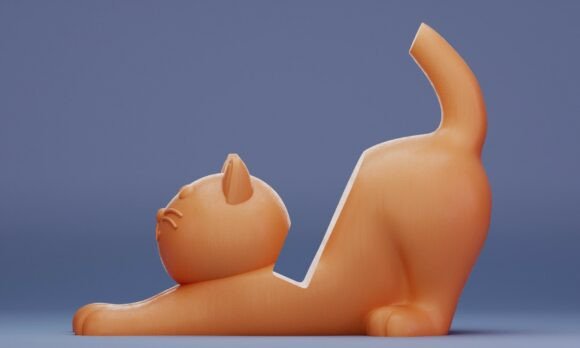
Cat Smartphone Holder 3D Print Mode: A Practical Evaluation of the Single-Part STL Design
In the rapidly evolving landscape of desktop manufacturing, the barrier to entry has lowered significantly, yet the gap between a "printable object" and a "functional tool" remains distinct. For users of the Bambu Lab A1 Mini—a machine praised for its speed and accessibility—the challenge often lies not in printing capability, but in design utility. This evaluation examines a specific digital asset: the Cat Smartphone Holder 3D Print Mode. Presented as a single-piece model file available in both STL and 3MF formats, this design promises simplicity through its geometry. It eliminates the need for assembly, reducing print time and potential failure points associated with multi-part constructions.
The core appeal of this holder is its minimalist approach to functionality. By utilizing a single continuous mesh, the design relies on the structural integrity of the printed material rather than mechanical fasteners or adhesives. For professionals, creators, and hobbyists who value efficiency, this translates to a streamlined workflow. However, the true test of any 3D-printed accessory is how it performs under real-world conditions. This analysis breaks down the physical characteristics, print settings, and practical outcomes of producing this cat-themed smartphone stand using Esun ePLA Matte filament on a 0.4 mm nozzle setup.
Design Philosophy and Structural Characteristics
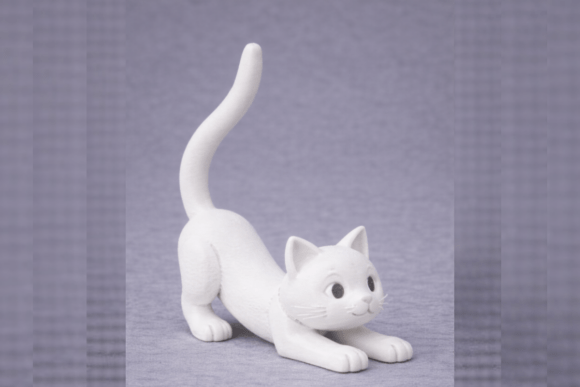
The Cat Smartphone Holder 3D Print Mode is defined by its geometric constraints and aesthetic intent. Measuring approximately 6.5 cm in width (X-axis), 13.7 cm in depth (Y-axis), and 10.2 cm in height (Z-axis), the footprint is compact enough to sit comfortably on a crowded desk without obstructing workflow. The height allows for an ergonomic viewing angle, crucial for video calls, recipe following, or media consumption while working.
What distinguishes this model from generic holders is its reliance on overhangs and cantilevered structures typical of feline silhouettes. In traditional FDM (Fused Deposition Modeling) printing, such features usually require support structures to prevent sagging. The innovation here lies in the orientation and wall loop configuration, which allows the printer to bridge these gaps cleanly. The single-piece nature means there are no seams to clean up, no magnets to lose, and no alignment issues after printing. It is a "print-and-use" solution that respects the user’s time.
The choice of a cat motif adds a layer of personality to the workspace. For educators, bloggers, and small business owners, office decor often reflects brand identity or personal taste. A functional object that also serves as subtle decoration can enhance the psychological comfort of the work environment without distracting from primary tasks. Unlike mass-produced plastic stands, this holder offers a bespoke feel, even when produced via automated processes.
Print Execution and Material Performance
Evaluating the success of a 3D print requires looking beyond the final image to the parameters that created it. The tests were conducted on a Bambu Lab A1 Mini, equipped with a standard 0.4 mm nozzle. This combination is widely regarded as the sweet spot for balancing detail resolution and print speed. The use of Esun ePLA Matte filament introduces a specific textural quality. Unlike glossy PLA, which can show layer lines and fingerprints easily, matte finishes tend to hide minor imperfections better and provide a more premium tactile experience.
The recommended settings for this build are straightforward but critical for success:
- Wall Loops: Utilizing multiple perimeters ensures the structural rigidity of the thin arms that hold the phone. A thicker wall count prevents flexing when inserting or removing devices.
- Sparse Infill at 15%: This density strikes a balance between weight reduction and strength. For a hollow structure like this holder, 15% provides sufficient internal lattice to resist cracking without wasting material or extending print time unnecessarily.
- Layer Height of 0.2 mm: This is the standard layer height for general-purpose prints. It offers a good compromise between surface smoothness and speed. Given the Z-dimension of 10.2 cm, this results in a manageable print duration.
- No Support Required: Perhaps the most significant advantage. The absence of supports means zero post-processing effort related to cleaning up residual material. This reduces the risk of damaging delicate parts of the cat design during removal.
When executed correctly, the Esun ePLA Matte filament adheres well to the build plate and maintains its shape throughout the cooling phase. The matte texture also helps in diffusing light, making the object look less like a raw prototype and more like a finished product. This is particularly relevant for professionals who may display their prints in client-facing environments or on social media content.
Real-World Usability and Ergonomics
Once printed, the Cat Smartphone Holder 3D Print Mode must perform its primary function: holding a smartphone securely. The dimensions suggest compatibility with most modern smartphones, including larger models like the iPhone Pro Max series or Android flagships. The Y-axis depth of 13.7 cm provides ample room for the device to rest without tipping forward, while the X-axis width ensures stability against lateral forces.
In practice, the rigid nature of PLA means the holder does not compress or deform under the weight of the phone. However, users should be aware that PLA can become slightly brittle in cold temperatures. If used in an unheated garage or outdoor setting during winter, extreme care should be taken to avoid dropping the device, as the impact could potentially crack the holder. For indoor office use, however, the reliability is high.
The viewing angle is another critical factor. The 10.2 cm height positions the screen at a level that reduces neck strain compared to placing the phone flat on a desk. This is particularly beneficial for professionals taking Zoom calls or educators demonstrating digital content. The single-piece design ensures that the angle remains fixed, providing consistency every time the phone is placed. There is no wobble or adjustment mechanism to loosen over time, which is a common failure point in articulated plastic stands.
Audience Fit and Practical Applications
Who benefits most from this specific design? The answer lies in identifying users who prioritize low-maintenance tools with aesthetic appeal.
Freelancers and Remote Workers: For those working from home, desk space is often limited. A compact holder that organizes the phone while adding a touch of whimsy can improve focus and reduce clutter. The ease of printing means they can produce spares if needed, or gift them to colleagues.
Educators and Content Creators: Teachers using tablets or phones for lesson plans benefit from the stable, hands-free viewing angle. Similarly, creators filming short-form content can use the holder as a basic tripod alternative. The matte finish helps reduce glare from ring lights or overhead lighting, improving video quality.
Small Business Owners: In retail or service environments, having a secure place to display a tablet for menus, payments, or information is essential. While this design is optimized for smartphones, its sturdy base can sometimes accommodate smaller tablets depending on the specific phone size. Even if used primarily for phones, it serves as an effective queue management tool.
Hobbyists and Makers: For those learning about 3D printing, this model serves as an excellent test piece. It challenges the printer’s ability to handle overhangs and bridges without support, providing immediate feedback on calibration and slicer settings. Success with this model builds confidence for more complex projects.
Limitations and Considerations
No design is without limitations. The Cat Smartphone Holder 3D Print Mode is static; it cannot adjust to different phone sizes or orientations. Users with very large phablets or those who prefer landscape mode may find the fit less optimal. Additionally, while the matte filament hides scratches, it can attract dust more readily than glossy surfaces. Regular wiping with a dry cloth is recommended to maintain appearance.
Furthermore, the single-piece construction means that if a part of the cat design breaks—such as an ear or tail due to accidental impact—it cannot be easily repaired without glue or resin. However, given the robust nature of PLA and the careful handling required for any electronic accessory, such damage is rare in normal use.
Final Assessment
The Cat Smartphone Holder 3D Print Mode represents a thoughtful intersection of form and function. By leveraging the capabilities of modern printers like the Bambu Lab A1 Mini and materials like Esun ePLA Matte, it delivers a product that is both visually appealing and practically useful. The decision to use a single-piece model file simplifies the production process, eliminating post-processing headaches and ensuring consistent quality across multiple prints.
For professionals, creators, and hobbyists seeking a reliable, aesthetically pleasing way to manage their mobile devices, this holder is a strong candidate. It does not promise revolutionary technology, but it excels in execution. It is a testament to the idea that good design in 3D printing is not always about complexity, but about solving everyday problems with elegance and efficiency. Whether used in a busy office, a quiet study, or a creative studio, this holder proves that functional objects can also contribute positively to the visual and emotional tone of a workspace.